

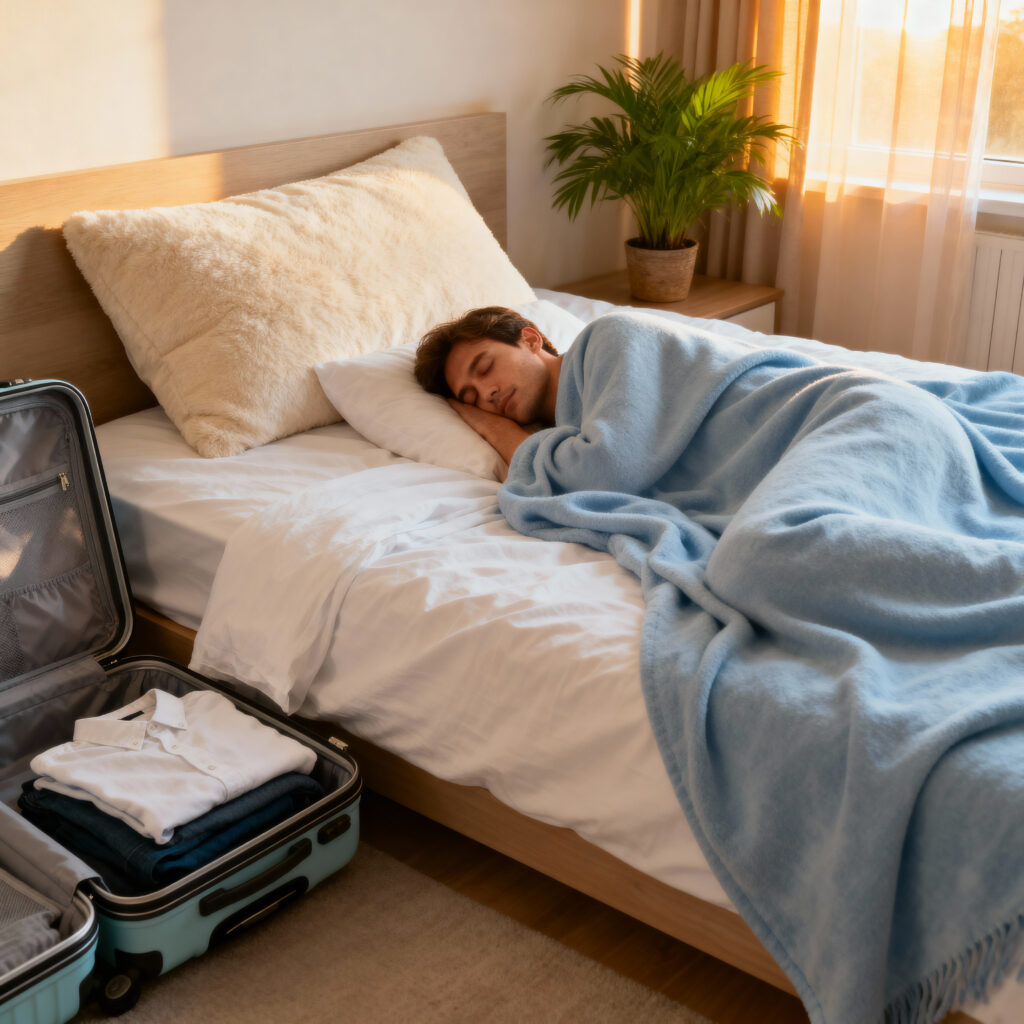
Traveling can be exciting, whether it’s for business, vacation, or visiting family, but it often comes with a major downside: disrupted sleep. Sleeping well while on the road is challenging due to unfamiliar environments, changing time zones, noisy surroundings, and irregular schedules. Poor sleep during travel can leave you groggy, affect your mood, and even compromise your immune system. Fortunately, with some planning and smart strategies, you can improve your sleep quality while traveling. Here’s how.
One of the biggest challenges when traveling, especially across time zones, is jet lag. Your body’s internal clock is accustomed to your home schedule, so sudden shifts can interfere with sleep. To minimize disruption, try gradually adjusting your sleep and wake times a few days before your trip to better align with your destination’s time zone.
Once you arrive, resist the urge to nap excessively during the day. Instead, try to stay awake until the local bedtime. Exposure to natural light in the morning helps reset your circadian rhythm and signals your body that it’s time to be awake, while darkness in the evening encourages melatonin production for better sleep at night.
Where you stay can significantly impact your sleep quality. Look for accommodations that offer quiet rooms, blackout curtains, and comfortable bedding. If possible, request a room away from elevators, ice machines, or street noise.
For longer trips, consider lodging with options to control the room temperature. Cooler rooms, generally between 60°F and 67°F, tend to promote deeper, more restorative sleep. A travel-sized fan or white noise machine can also help mask disruptive noises.
Bringing a few sleep essentials can help your body feel more at home, even in unfamiliar surroundings. A comfortable travel pillow and eye mask can improve rest on planes, trains, or in hotel rooms. Earplugs or noise-canceling headphones are invaluable for blocking out snoring roommates, traffic, or airplane noise.
If you have a preferred blanket or sheet, packing a compact version can provide a sense of familiarity that helps your mind relax. Even small touches, like your own pillowcase or a favorite sleep scent, can signal to your body that it’s time to sleep.
Even when traveling, maintaining a bedtime routine can signal to your body that it’s time to sleep. Try to stick to familiar habits, such as reading, meditating, stretching, or listening to calming music before bed. Avoid stimulating activities like work or intense exercise right before trying to sleep.
Limiting screen time in the hour before bed is especially important. Phones, tablets, and laptops emit blue light, which can suppress melatonin production and make it harder to fall asleep. If you must use devices, consider blue light filters or glasses designed to reduce blue light exposure.
Food and drink can impact your sleep, especially while traveling. Heavy meals, alcohol, and caffeine close to bedtime can interfere with falling and staying asleep. Opt for lighter, balanced meals in the evening, and save coffee or energy drinks for earlier in the day. Staying hydrated is important, but try to limit fluids right before bed to avoid nighttime trips to the bathroom.
Regular physical activity during your trip can help improve sleep quality. Walking, stretching, or engaging in light exercise during the day can increase your body’s readiness for rest at night. Even simple activities like exploring your destination on foot or taking stairs instead of elevators can make a difference.
Sleeping well while on the road requires planning, adaptability, and attention to your body’s needs. By adjusting your sleep schedule, choosing accommodations carefully, packing sleep essentials, maintaining a routine, watching your diet, and staying active, you can maximize your rest even in unfamiliar environments. Prioritizing quality sleep during travel ensures that you stay alert, energized, and ready to fully enjoy your journey—whether it’s for work or pleasure. With the right strategies, you can turn any hotel room, airplane, or temporary space into a restful haven, making your trips more enjoyable and less exhausting.



