

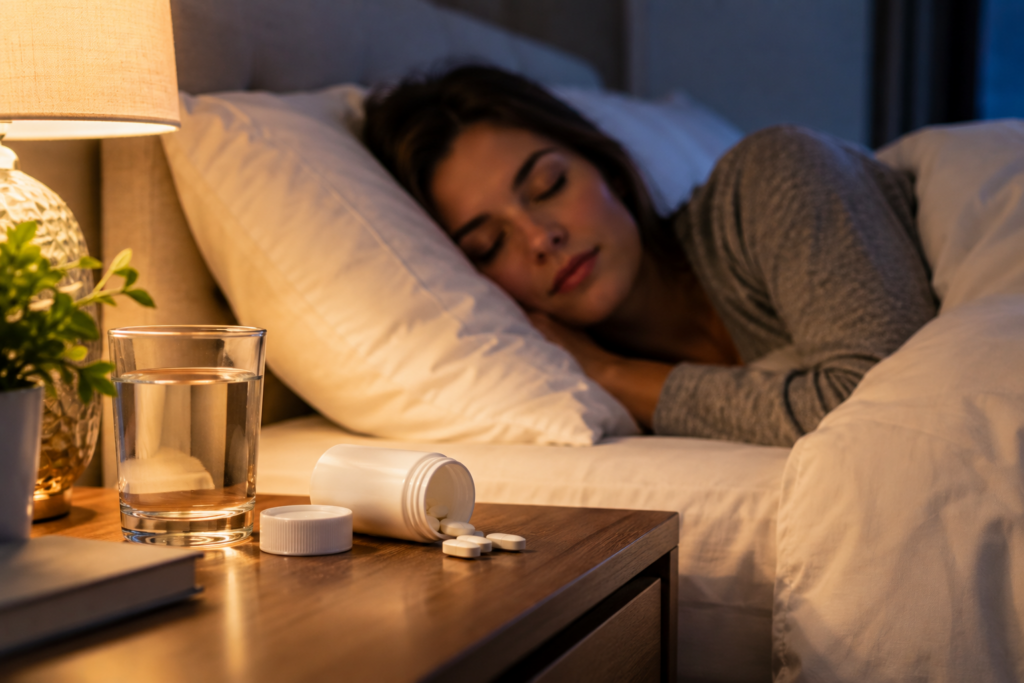
Everyone experiences an occasional night when falling asleep is more difficult than usual. Maybe your mind is still racing after a busy day, your normal schedule has changed, you’re traveling, or you simply can’t seem to settle down at bedtime. When occasional sleeplessness interferes with your night, an over-the-counter sleep aid can provide a convenient option for temporary relief.
OTC sleep aids are available without a prescription and are intended to help people experiencing occasional difficulty falling asleep. Products such as Jet-Asleep provide a straightforward nighttime option for adults who want help getting to sleep when occasional sleeplessness strikes.
Understanding how OTC sleep aids work, when they may be useful, and how to use them responsibly can help you decide whether one fits your nighttime routine.
An OTC sleep aid is a nonprescription medication designed to help relieve occasional sleeplessness. Unlike prescription sleep medications, these products can be purchased without first obtaining a prescription from a healthcare provider.
Different sleep aids can contain different active ingredients. Jet-Asleep Nighttime Sleep Aid contains diphenhydramine HCl, an ingredient commonly used in nonprescription nighttime sleep aids. OTC sleep aids are intended for occasional rather than long-term sleeplessness. They can be especially convenient to keep on hand for those nights when your normal bedtime routine isn’t quite enough to help you settle in for the night.
Diphenhydramine is an antihistamine that can also cause drowsiness. When used as directed in an OTC nighttime sleep aid, this drowsiness can help reduce difficulty falling asleep. This makes an OTC sleep aid a practical option when you’re experiencing occasional sleeplessness and want some additional help at bedtime.
Because products can have different ingredients and strengths, it’s important to read the Drug Facts label and follow the directions for the specific sleep aid you’re taking. Following those instructions helps ensure that you’re using the product as intended.
There are many reasons you might occasionally have trouble falling asleep. A demanding week at work can make it difficult to mentally switch off at bedtime. Traveling can temporarily disrupt your normal schedule. Holidays, major events, changes in routine, or simply having a lot on your mind can make an otherwise normal night feel restless.
That’s where the convenience of an OTC sleep aid can be appealing. Instead of requiring an appointment or prescription, a product such as Jet-Asleep can be available when occasional sleeplessness happens. For people who don’t regularly have trouble sleeping but occasionally need additional nighttime support, having an OTC option available can provide a simple addition to their bedtime routine.
An OTC sleep aid doesn’t mean the rest of your bedtime routine should disappear. In fact, creating a relaxing environment can complement your efforts to settle down for the night. Try lowering the lights as bedtime approaches and giving yourself some time away from work or other stimulating activities. Put away the laptop, silence unnecessary phone notifications, and make your bedroom comfortable.
Reading, taking a warm shower, listening to relaxing music, or following another quiet nighttime ritual can signal that the active part of your day is coming to an end. When occasional sleeplessness occurs, using an OTC sleep aid as directed alongside a relaxing routine can create a more intentional approach to bedtime.
One of the advantages of OTC sleep aids is accessibility. You don’t necessarily know in advance when you’re going to experience an occasional difficult night.
Perhaps you’ve been working late for several nights. Maybe you’re away from home and your routine feels completely different. You might have an important day tomorrow and find yourself having difficulty settling down.
Having an OTC nighttime sleep aid available means you have an option designed specifically for occasional sleeplessness. Jet-Asleep comes in caplet form, making it easy to keep with your other nighttime essentials and use according to the package directions when needed.
Although OTC sleep aids are available without a prescription, they’re still medications and should be treated accordingly. Always read and follow the complete Drug Facts label before use.
Avoid taking more than directed or combining products containing the same active ingredient. Because nighttime sleep aids can cause drowsiness, users should also follow label warnings regarding activities such as driving or operating machinery.
Certain people should consult a healthcare professional before using a sleep aid, particularly when taking other medications or managing health conditions. Persistent sleeplessness can also be a reason to speak with a healthcare professional rather than continually relying on an OTC product. Responsible use allows OTC sleep aids to serve the purpose for which they’re designed: providing temporary relief of occasional sleeplessness.
Not every restless night requires a complicated solution. Sometimes your routine gets disrupted, your mind remains active longer than you’d like, or falling asleep is simply harder than normal. For those occasional nights, an OTC nighttime sleep aid can provide a convenient option.
Jet-Asleep Nighttime Sleep Aid offers an accessible way to address occasional sleeplessness without requiring a prescription. When used according to the product label, it can become a useful option to keep on hand for those nights when you could use some extra help getting to sleep.
Combined with a comfortable bedroom, a consistent bedtime, and a relaxing evening routine, an OTC sleep aid can be one part of a thoughtful approach to getting through occasional restless nights and making bedtime feel a little easier.



