

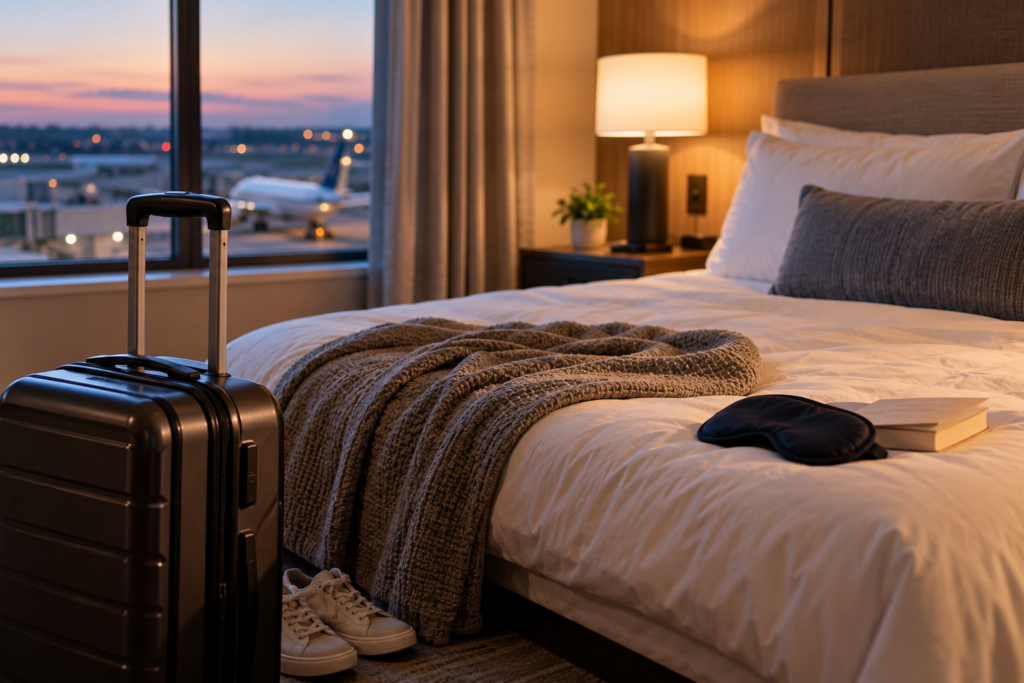
Travel can be exciting, whether you’re heading somewhere for a vacation, visiting family, attending an important event, or traveling for work. Unfortunately, getting away from your normal routine can sometimes make getting a good night’s sleep more difficult. Even if you’re exhausted after a long day of traveling, you may find yourself lying awake in an unfamiliar room wondering why you can’t fall asleep.
Changes in your schedule, unfamiliar surroundings, different time zones, and the excitement or stress of traveling can all temporarily interfere with your normal sleep habits. For many people, these disruptions are occasional and improve once they become comfortable with their new schedule.
Preparing ahead of time can make travel nights easier. Maintaining familiar bedtime habits, creating a comfortable sleeping environment, and having an option available for occasional sleeplessness can all help. For adults who use over-the-counter nighttime sleep aids, a product such as Jet-Asleep can also be a convenient addition to a travel bag when used according to the product label.
At home, you probably have more of a routine than you realize. You may wake up at approximately the same time, eat meals on a relatively predictable schedule, finish work at a certain hour, and begin winding down around the same time each evening.
Travel can change all of that in a single day.
An early flight might require waking up several hours earlier than usual. A late arrival could keep you awake well beyond your normal bedtime. Road trips, airport delays, events, restaurant reservations, and sightseeing can all shift the timing of your day. When bedtime finally arrives, your body may not feel ready for sleep at the time you’d normally expect.
Traveling across time zones can create another challenge. Your destination’s clock may say it’s bedtime, while your body still feels like it’s several hours earlier. Likewise, you might wake up much earlier than expected because your body is still operating according to the schedule you follow at home.
The farther you travel across time zones, the more noticeable this adjustment can sometimes feel. Giving yourself time to adapt to the local schedule can help. Once you arrive, try to gradually follow the meal, activity, and sleep schedule of your destination rather than constantly operating according to the time back home.
Sometimes time zones aren’t the issue at all. You can travel within the same state and still have difficulty sleeping because you’re somewhere unfamiliar. Hotel rooms, vacation rentals, guest rooms, and other accommodations rarely feel exactly like your own bedroom.
The mattress may feel different. The room might be warmer or cooler. There could be unfamiliar noises in the hallway or outside the window. Even the lighting may be different from what you’re accustomed to at home. Small differences that don’t seem important during the day can suddenly become much more noticeable when you’re trying to fall asleep.
You probably can’t bring your entire bedroom on vacation, but you can bring some of your normal habits. If you usually read before bed, pack a book. If you prefer a dark room, consider bringing an eye mask. If outside noises bother you, earplugs may be useful. Comfortable sleepwear, familiar toiletries, and other small items can make an unfamiliar room feel a little more like home.
Try to maintain your usual wind-down routine when possible. Put away work, lower the lights, reduce unnecessary screen time, and give yourself an opportunity to relax before trying to sleep. Familiar habits can provide some consistency even when everything else about your day has changed.
Travel isn’t always relaxing. Getting to the airport, finding your gate, dealing with delays, navigating an unfamiliar city, attending meetings, or trying to fit multiple activities into a vacation day can leave you mentally stimulated long after you’ve reached your hotel.
You may be physically tired while your mind is still processing everything that happened. Instead of expecting yourself to fall asleep immediately, build a little quiet time into the end of your day. Unpack what you need for the morning, take a shower, lower the lights, and give yourself some time away from the activity of the day.
Coffee, tea, soda, energy drinks, and other sources of caffeine can be especially appealing during a long travel day. An early flight or long afternoon can make an extra source of caffeine seem particularly useful.
However, caffeine consumed later in the day can potentially make falling asleep more difficult for some people. Pay attention to when you’re consuming caffeine and how it typically affects you. Saving your caffeine for earlier portions of the travel day may make it easier to transition toward bedtime later.
Even when you prepare carefully, there may still be a night when sleep doesn’t come easily. That’s where planning for occasional sleeplessness can be helpful.
For adults who choose to use an OTC nighttime sleep aid, Jet-Asleep Nighttime Sleep Aid can provide a convenient option for temporary relief of occasional sleeplessness. Its caplet format also makes it easy to include with your other travel essentials.
Jet-Asleep contains diphenhydramine HCl, an ingredient commonly used in nonprescription nighttime sleep aids. As with any OTC medication, Jet-Asleep should always be used according to the Drug Facts label, including all directions and warnings.
Travelers should be especially mindful of next-day plans. Because nighttime sleep aids can cause drowsiness, follow the product’s warnings and don’t drive, operate machinery, or perform activities requiring alertness while affected by the medication.
An OTC sleep aid can be useful for occasional sleeplessness, but it doesn’t need to replace the rest of your bedtime routine. Continue creating a comfortable environment, following a reasonable schedule, and giving yourself time to wind down. Think of these habits as the foundation of your travel sleep routine.
If you choose to use Jet-Asleep when occasional sleeplessness occurs, it can fit into that broader routine when appropriate and used as directed. Persistent sleep difficulties are different from an occasional restless travel night. If trouble sleeping continues, speak with a healthcare professional rather than repeatedly relying on an OTC nighttime sleep aid.
Travel is much more enjoyable when you have enough energy to experience everything you’ve planned. While a new environment or schedule can temporarily disrupt your usual sleep routine, a little preparation can make nighttime easier.
Try to follow a consistent schedule, bring familiar bedtime habits with you, make your sleeping environment as comfortable as possible, and allow yourself time to relax after busy travel days. For adults who experience occasional sleeplessness while away from home, Jet-Asleep can also be a convenient OTC nighttime option to pack alongside your other travel essentials and use according to the label.
Travel may take you away from your usual bedroom, schedule, and routine, but that doesn’t mean you have to leave your entire bedtime routine behind. A few familiar habits and a plan for those occasional difficult nights can help you feel better prepared to rest wherever your travels take you.



